
 The Ultimate Guide to Crispy French Fries in 7 steps
Few snacks are as satisfying as perfectly golden, crunchy fries with a soft, fluffy center. At Potato World, we believe that great fries are about more than simply frying potatoes. The choice of potato, cutting, soaking, drying, cooking, seasoning, and serving all contribute to the final experience.
Whether you are preparing them at home or simply want to understand what makes restaurant-style fries delicious, these 7 practical steps will help you understand the process.
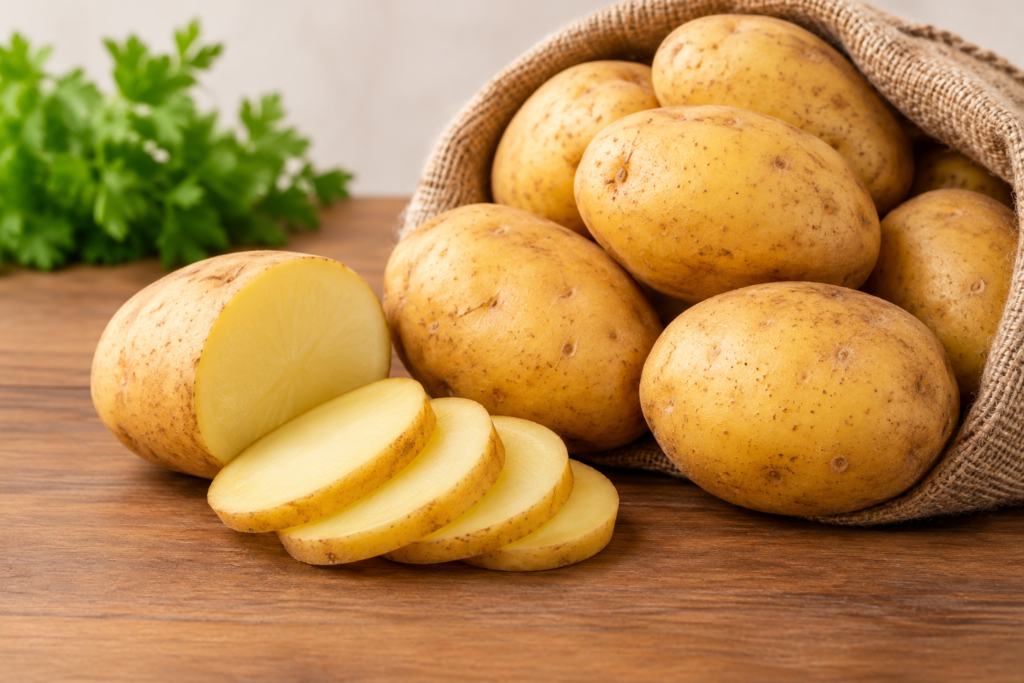
1. Choose the Right Potatoes
The foundation of good French fries is the potato itself. Choose firm, fresh potatoes with a good balance of starch and moisture. Starchier varieties are often preferred because they can develop a crisp exterior while remaining fluffy inside.
Avoid potatoes that are soft, damaged, or have excessive green areas. Good ingredients are the starting point for consistent results.
2. Cut Them Evenly
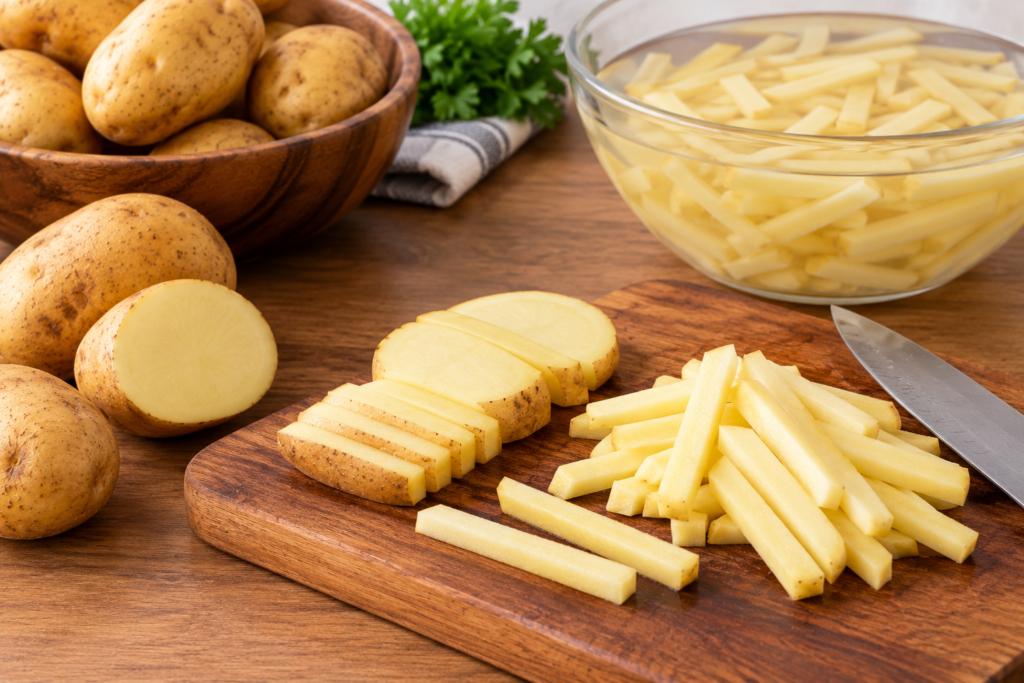
After washing and peeling the potatoes, cut them into similar-sized sticks. Consistent cutting is important because pieces of different thicknesses cook at different speeds.
For classic French fries, medium-sized sticks work well. Keeping the pieces uniform helps create a more balanced texture throughout the batch.
3. Soak Away Excess Starch
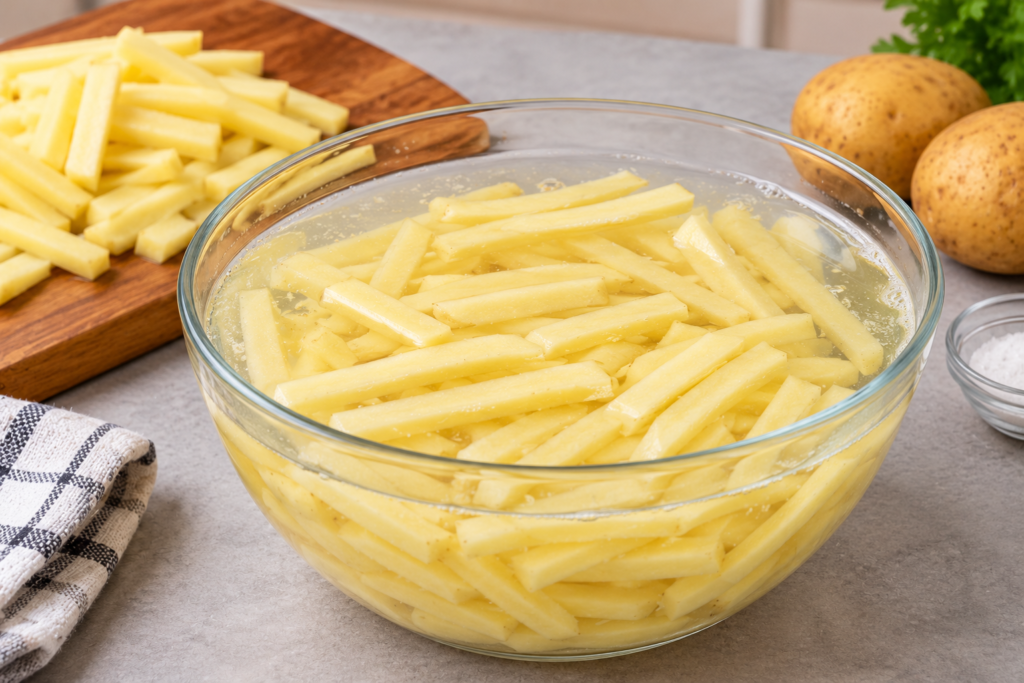
Place the cut potatoes in cold water and allow them to soak. This step helps remove some surface starch, which can otherwise contribute to sticking and uneven browning.
After soaking, rinse them thoroughly. Clean preparation is an important part of achieving better French fries, especially when you want a crisp exterior.
4. Dry Them Properly
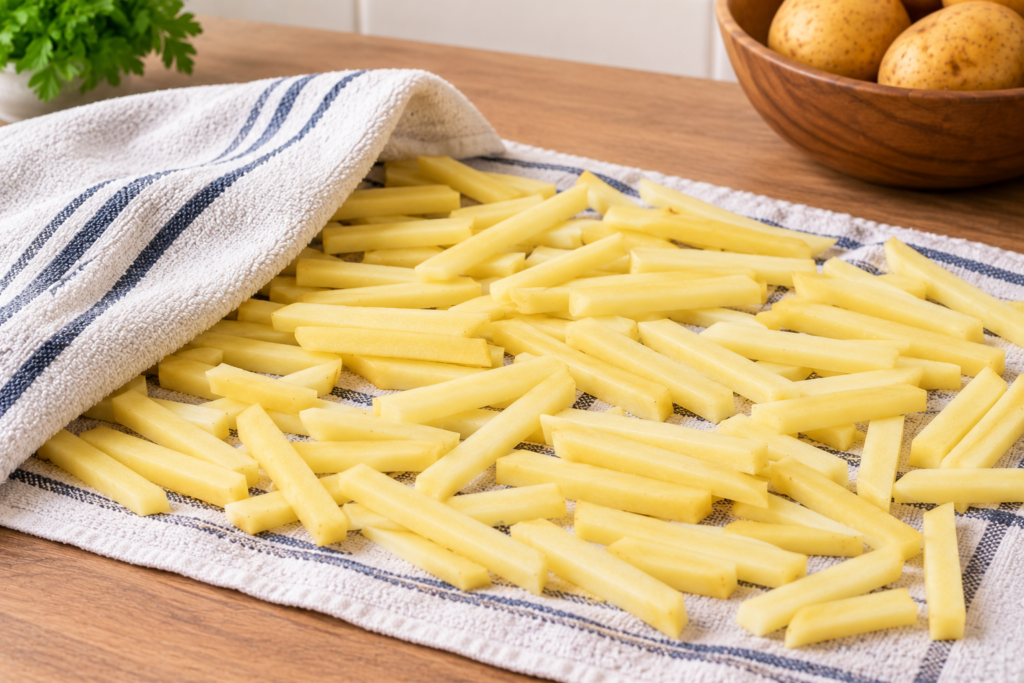
This step is easy to overlook but makes a major difference. Drain the potatoes and dry them thoroughly using a clean kitchen towel or paper towels.
Excess water can cause oil to splatter and can interfere with browning. Properly dried potatoes are easier to cook and can produce more consistent French fries.
5. Cook in Stages
A common technique for achieving a crisp outside and soft center is staged cooking. The first stage gently cooks the inside, while the second stage develops the golden, crisp exterior.
If you are cooking at home, follow the manufacturer’s safety guidance for your cooking equipment and oil. Avoid overcrowding the pan or fryer, as this can lower the cooking temperature and affect the texture of your French fries.
6. Season While Fresh
Once cooked, allow excess oil to drain and season the fries while they are still hot. Salt sticks better to a warm surface, helping distribute flavor more evenly.
Classic seasoning works beautifully, but you can also experiment with garlic, paprika, herbs, chili, or other spice blends. At Potato World, creative seasoning is one way to make familiar French fries more exciting.
7. Serve Immediately
Crispiness does not last forever. For the best experience, serve your French fries shortly after cooking. Pair them with ketchup, spicy sauces, cheese, dips, or your favorite accompaniment.
🥔 What Makes Great Fries?
Great French fries usually combine three important qualities: a crisp exterior, a soft interior, and balanced seasoning. However, personal preference matters too. Some people prefer thin and extra-crispy fries, while others enjoy thicker pieces with a softer center.